Choosing the Right Plant-Based Path
Choosing the right plant-based diet starts with alignment. Learn how to match your eating style with your health goals, ethics, and lifestyle for long-term success.
TIPS
1/9/20262 min read

How to Align Your Diet With Your Health, Ethics, and Lifestyle
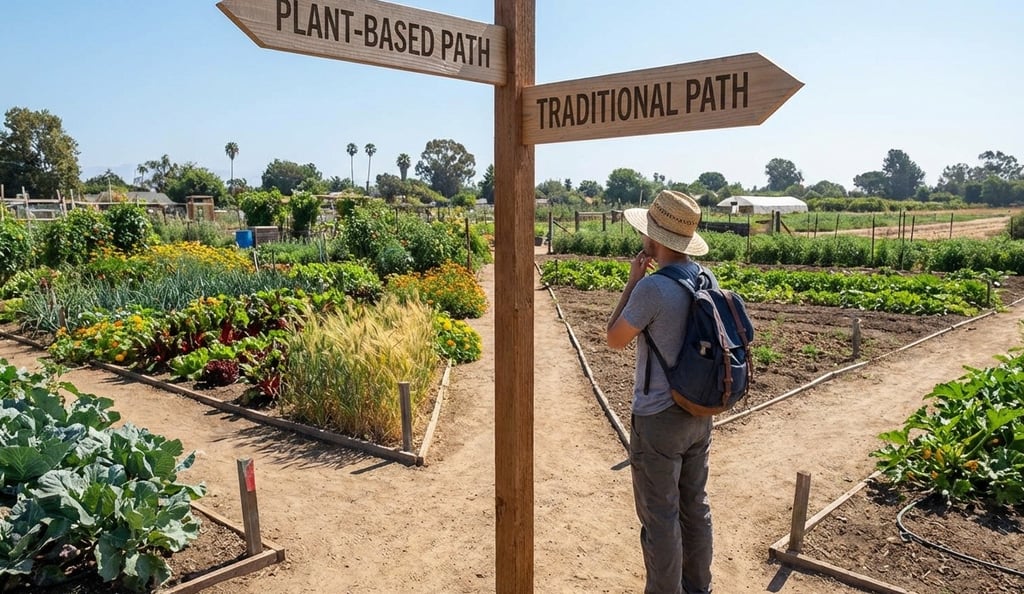
Plant-based eating is not a single destination—it is a path, and the most successful path is the one that aligns with who you are, what you value, and how you live. Many people fail not because plant-based eating “doesn’t work,” but because they adopt an approach that conflicts with their health needs, ethical convictions, or daily realities.
This guide is designed to help you choose a plant-based path that is sustainable, nourishing, and deeply aligned, so it becomes a lifestyle—not a short-lived experiment.
Why Alignment Matters More Than Perfection
A common mistake when adopting a plant-based diet is striving for immediate perfection. Research and real-world experience consistently show that alignment predicts adherence.
When your diet aligns with:
Your physical health needs
Your moral or ethical convictions
Your schedule, culture, and social environment
…it becomes easier to maintain, even under pressure.
Plant-based success is not about strict rules—it is about congruence.
Clarify Your Primary Motivation First
Before choosing a specific plant-based pattern, identify why you are doing this. Your motivation will shape your strategy.
Health-Driven Motivation
If your primary goal is:
Weight management
Heart health
Blood sugar control
Digestive improvement
You may benefit most from a whole-food, plant-forward or WFPB-style approach, emphasizing fiber, nutrient density, and minimal processing.
Key focus:
Whole grains, legumes, vegetables, fruit, and reduced ultra-processed foods.
Ethics-Driven Motivation
If your motivation centers on:
Animal welfare
Compassion
Consistency between values and actions
A vegan or near-vegan framework may feel most aligned. For many, ethical clarity strengthens long-term commitment.
Key focus:
Avoiding animal-derived ingredients and developing label literacy.
Environment-Driven Motivation
If sustainability and stewardship matter most, alignment often comes from:
Reducing animal products
Choosing local and seasonal foods
Minimizing food waste
A flexitarian or plant-forward model can still deliver substantial environmental benefits.
Key focus:
Progress over purity, local sourcing, seasonal eating.
Assess Your Lifestyle Realities Honestly
A diet that ignores your lifestyle will eventually collapse. Consider these factors carefully.
Time and Energy
Do you cook regularly or rely on convenience?
Do you need batch cooking or quick assembly meals?
Alignment tip:
Choose systems (pantry staples, frozen foods, cascade cooking) that support your schedule.
Social and Cultural Context
Do you attend frequent family gatherings?
Are you often eating out or traveling?
Alignment tip:
A flexible plant-based approach may reduce friction while still honoring your values.
Budget Considerations
Plant-based eating can be economical, but specialty products can inflate costs.
Alignment tip:
Anchor your diet in grains, beans, lentils, seasonal produce, and bulk foods.
Matching Plant-Based Paths to Real People
Here is a practical way to think about alignment:
Flexitarian: Ideal for beginners, families, and social flexibility
Vegetarian / Lacto-Ovo: Good transitional or cultural fit
Vegan: Best for ethical clarity and environmental alignment
Whole-Food Plant-Based: Optimal for health-focused individuals
There is no hierarchy—only fit.
The Role of Identity and Long-Term Adherence
Behavioral science shows that habits stick when they become part of identity.
Instead of asking:
“Can I follow this diet forever?”
Ask:
“Does this way of eating reflect who I want to become?”
When food choices reinforce identity—compassionate, disciplined, health-conscious, intentional—they require less willpower over time.
Common Pitfalls When Alignment Is Ignored
Choosing a diet that is too rigid for your social environment
Ignoring nutrient planning due to ethical enthusiasm
Adopting rules that create stress or isolation
Viewing setbacks as failure instead of feedback
Alignment allows for adaptation without abandonment.
How to Reevaluate and Adjust Over Time
Your plant-based path does not need to remain static.
Life seasons change:
Health conditions evolve
Schedules shift
Knowledge deepens
Periodic reassessment ensures your diet continues to serve you, not control you.
Final Reflection
Plant-based eating is not about fitting yourself into a label—it is about shaping a way of eating that supports your body, conscience, and life circumstances.
When alignment is present:
Motivation becomes internal
Consistency becomes natural
The diet becomes a lifestyle
This is where lasting transformation begins.