What Does “Plant-Based” Really Mean?
What does plant-based really mean? Learn the difference between vegan, vegetarian, flexitarian, and plant-forward diets—and how to choose the right one.
TIPS
10/6/20253 min read
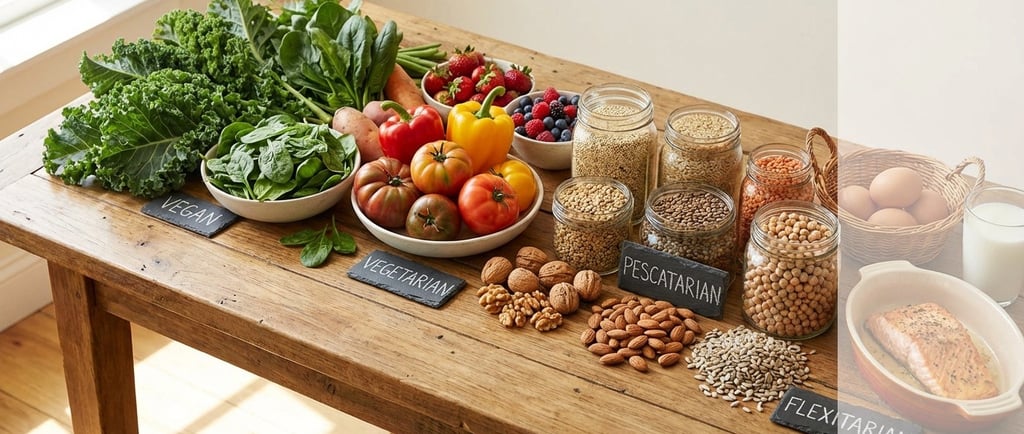
A Clear Guide to Vegan, Vegetarian, and Flexitarian Diets
The term plant-based is everywhere—on food labels, restaurant menus, documentaries, and social media. Yet for many people, it remains surprisingly unclear. Does plant-based mean vegan? Does it allow meat sometimes? Is it about health, ethics, or the environment?
Understanding what plant-based truly means is the first and most important step toward making informed, sustainable dietary choices. This guide breaks down the major plant-based dietary patterns in simple, practical terms—without pressure, guilt, or confusion—so you can choose an approach that fits your life.
What “Plant-Based” Means at Its Core
At its foundation, a plant-based diet emphasizes foods that come from plants:
Fruits
Vegetables
Whole grains
Legumes (beans, lentils, peas)
Nuts and seeds
Animal products are minimized or excluded depending on the specific approach. Importantly, plant-based describes a spectrum, not a single rigid rulebook.
This flexibility is one reason plant-based eating has become so widely adopted—it can be adapted to different health goals, cultural traditions, and stages of life.
The Plant-Based Spectrum: Key Diet Types Explained
Vegan
What it includes:
All plant foods
No animal-derived foods or ingredients
What it excludes:
Meat, poultry, fish
Dairy and eggs
Honey and animal-derived additives (gelatin, casein, whey)
Vegan diets are often motivated by ethical, environmental, or spiritual convictions, though many people also choose veganism for health reasons. When well planned, a vegan diet can meet all nutritional needs, with particular attention to vitamin B12.
Lacto-Vegetarian
What it includes:
Plant foods
Dairy products (milk, cheese, yogurt)
What it excludes:
Meat, poultry, fish
Eggs
This pattern is common in certain cultures and faith traditions. It allows for calcium-rich dairy while still avoiding animal flesh.
Ovo-Vegetarian
What it includes:
Plant foods
Eggs
What it excludes:
Meat, poultry, fish
Dairy products
Ovo-vegetarian diets rely on eggs as a protein source while excluding dairy and meat.
Lacto-Ovo Vegetarian
What it includes:
Plant foods
Dairy products
Eggs
What it excludes:
Meat, poultry, fish
This is one of the most common vegetarian patterns and often serves as a transitional step toward more plant-centered eating.
Pescatarian
What it includes:
Plant foods
Fish and seafood
What it excludes:
Meat from land animals (beef, pork, poultry)
Pescatarian diets are often chosen for perceived heart-health benefits while still maintaining a largely plant-forward approach.
Flexitarian
What it includes:
Primarily plant-based foods
Occasional meat, poultry, or fish
What it excludes:
Nothing entirely, but animal foods are intentionally limited
Flexitarian eating is one of the most accessible entry points into plant-based living. It reduces pressure, supports gradual change, and still delivers many health and environmental benefits.
Whole-Food Plant-Based (WFPB)
What it includes:
Whole, minimally processed plant foods
What it limits or avoids:
Refined oils
Added sugars
Highly processed vegan products
This approach focuses less on labels and more on food quality, prioritizing nutrient density and long-term health outcomes.
Why There Is No “One Right” Plant-Based Diet
A common misconception is that plant-based eating requires perfection. In reality, the most successful dietary pattern is the one that is possible, sustainable, and nourishing for you.
Research consistently shows that even partial shifts toward plant-based eating—such as reducing meat intake or increasing vegetable consumption—can lead to:
Improved heart health
Better blood sugar regulation
Increased fiber intake
Reduced environmental impact
Progress matters more than purity.
Health vs. Ethics vs. Environment: Different Motivations, Same Foundation
People choose plant-based diets for different reasons:
Health: managing weight, blood pressure, diabetes, or inflammation
Ethics: concern for animal welfare and compassion
Environment: reducing carbon footprint, water use, and land degradation
While motivations may differ, the dietary foundation—whole, plant-centered foods—remains the same.
Common Myths About Plant-Based Eating
“Plant-based means no protein.”
In reality, legumes, whole grains, soy foods, nuts, and seeds provide ample protein when consumed in variety.
“You must be vegan to be plant-based.”
False. Plant-based describes an emphasis, not a label.
“It’s all or nothing.”
Small, consistent changes often lead to the most lasting results.
How to Choose the Right Plant-Based Approach for You
Ask yourself:
What is my primary goal—health, ethics, or sustainability?
Do I prefer gradual change or clear boundaries?
What feels realistic with my current lifestyle and social environment?
There is no failure in choosing a flexible approach. Many people begin as flexitarian or vegetarian and naturally progress toward a more plant-centered diet over time.
Final Thoughts
Plant-based eating is not a trend—it is a return to food in its most natural, nourishing form. Whether you are reducing meat, eliminating animal products entirely, or simply adding more plants to your plate, understanding the spectrum empowers you to move forward with clarity and confidence.
In future posts on Plant Based It, we will explore:
Protein and nutrient strategies
Digestive adaptation
Budget-friendly shopping
Meal prep systems
Social and lifestyle challenges
Plant-based is not about restriction—it is about abundance, intention, and long-term well-being.